
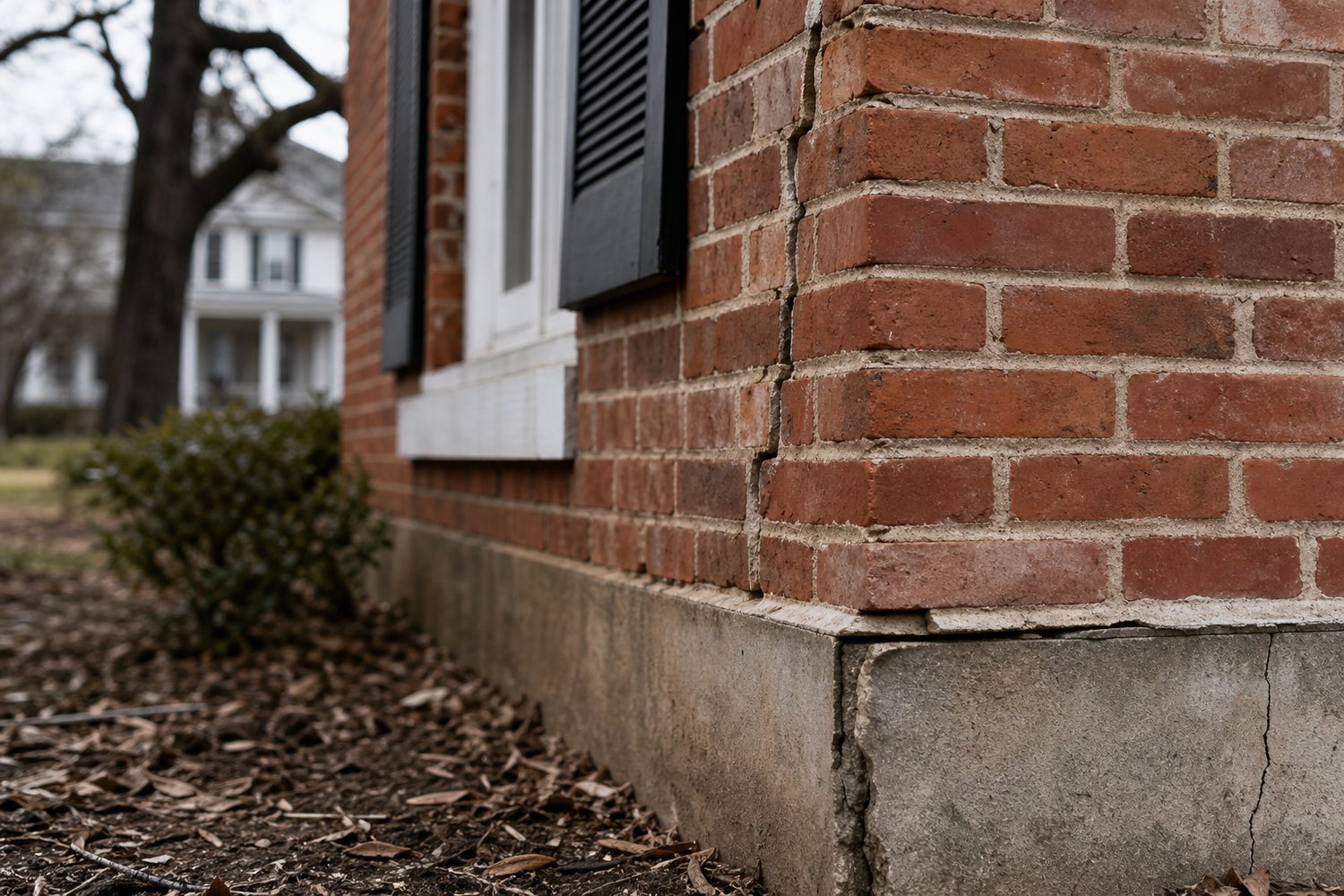
How do you sell an older Montgomery County home with foundation movement?
You sell an older Montgomery County home with foundation movement by organizing every record of the movement and any repairs, getting an appropriately qualified evaluation, and then choosing one clear path: repair first, evaluate and sell with the condition explained, or sell as-is at a price that reflects it. Texas sellers must disclose known material facts, so the goal is to give buyers documentation instead of surprises. The home sells best when the story is organized before the first showing.
Key Takeaways
- Greater Houston single-family homes averaged 58 days on market in September 2026, up from 56 a year earlier, according to the Houston Association of REALTORS®, and a home with foundation history should plan for extra time on top of that metro average.
- Selling "as-is" does not erase your obligation to disclose known material facts, including foundation movement and prior repairs.
- A foundation-repair proposal is a sales document, while a licensed professional engineer's report is the stronger tool for answering whether movement is active.
- Hydrostatic testing requires separate written seller authorization under the standard TREC resale contracts, so a general inspection does not automatically permit it.
- Avoid claims like "fully repaired" or "structurally sound" unless a current, qualified report supports them.
Foundation concerns make sellers anxious, and I understand why. In my experience, the sellers who do best are not the ones with the cleanest foundation. They're the ones with the cleanest paperwork and a plan they can explain in two minutes. Your specific numbers and strategy depend on your home's condition, location, and history, which is exactly what we sort out in a consultation.
What should you document before listing an older Montgomery County home?
Build a single documentation file before the listing goes live, covering every report, repair record, and warranty tied to the foundation. The point is to separate documented historical movement from current, unresolved movement, because buyers and their inspectors will try to figure out which one they're looking at.
What goes in the file?
- Prior engineering or structural reports
- Foundation-company proposals, invoices, and repair diagrams
- Permits or close-out records, if they exist
- Transferable warranties, with the transfer terms in writing
- Plumbing or hydrostatic-test reports
- Drainage or grading work records
- Insurance-claim information
- Photographs showing repair progress
Don't assume permit or warranty records exist. Montgomery County properties can fall under county, municipal, or other jurisdictional processes depending on where they sit, so request records from the relevant permitting authority and from the repair contractor. Never describe a repair as permitted or warranty-covered without paper to back it up.
Who should evaluate the foundation?
A foundation-repair contractor can give you a repair proposal, but a licensed professional engineer is better suited to give an independent opinion on whether movement is active, whether the structure remains serviceable, or whether monitoring makes sense. A foundation-level survey alone doesn't necessarily establish cause or severity. TREC's guidance on reporting foundation performance also cautions against treating a visual inspection as a definitive opinion on how a foundation is performing.
Which three questions should shape your strategy?
- Is the movement present or historical? A past repair and active movement are very different stories.
- Is the cause understood? Drainage, plumbing leakage, soil behavior, and inadequate support each point to different fixes.
- Is there a defined repair scope backed by an independent evaluation and documentation? If not, buyers fill the gap with worst-case assumptions.
I'd rather you hear hard news from your own evaluator than from the buyer's, which is the same reasoning behind a pre-inspection before listing. Surprises during a buyer's inspection window are what turn into hard renegotiations.
Should you repair the foundation first or sell the older Montgomery County home as-is?
It depends on what your evaluation says and how much time and flexibility you have. There are three realistic paths, and the worst choice is a vague one that leaves buyers guessing.
Path 1: Complete documented repairs before listing
This works best when the cause is understood and a defined scope is supported by an independent evaluation. You list with the reports, invoices, and warranty in hand. It removes much of the unknown, but it takes time and money up front, and it doesn't guarantee a buyer won't still investigate. Costs vary widely by scope, so I'd want to see your reports before talking numbers.
Path 2: Get an evaluation and sell with the condition explained
If immediate repair isn't justified, a written baseline can help future buyers judge stability. That baseline can include elevations, crack locations, door and window operation, drainage conditions, and moisture or plumbing observations. Monitoring is context, not proof that no defect exists, and it should never be marketed that way.
Path 3: Sell as-is, deliberately
An as-is sale means pricing and marketing the property for buyers prepared to investigate and accept the condition. It does not eliminate your duty to disclose known material facts. Review the TREC Seller's Disclosure Notice against the actual property history, and don't leave relevant answers blank or lean on a contractor's opinion in place of disclosing what you know, including dates, repairs, and reports. I walk my sellers through this before photos are ever scheduled. For a broader look at the trade-offs, read my post on whether to sell as-is or renovate.
What will buyers ask for, and how long will the sale take?
Expect buyer due diligence to go well beyond a general home inspection. Buyers may request an engineer's report, a foundation-company evaluation, elevation measurements, plumbing or hydrostatic testing, a drainage review, repair warranties, and clarity on whether those warranties transfer.
Can a buyer require hydrostatic testing?
Not automatically. Under the standard TREC residential resale contracts, hydrostatic testing must be separately authorized by the seller in writing. Know what you're agreeing to before you sign off, and understand how a test could affect the property. We'd talk through that request before you respond.
How much extra time should you plan for?
The most recent Houston Association of REALTORS® figures I have, from September 2026, describe the Greater Houston market, not Montgomery County alone. They're useful context for how much competition and buyer choice your listing faces.
| Greater Houston single-family measure | September 2026 | Comparison |
|---|---|---|
| Months of inventory | 5.5 | 5.1 in September 2025 |
| Average days on market | 58 | 56 in September 2025 |
| Home sales | 7,030 | Down 5.7% from September 2025 |
| Active listings | 40,192 | Metro-wide count |
Source: Houston Association of REALTORS®. These are metro figures, so don't read them as a Conroe, Magnolia, Willis, Montgomery, or The Woodlands number. With more inventory than a year ago, buyers have room to pass on a home that comes with unanswered foundation questions. A metro average also doesn't predict your timeline. Report review, lender questions, repair negotiations, and warranty-transfer checks can stretch a foundation-related sale beyond ordinary inspection scheduling. A local pricing and timing plan for your property is something I build in a market analysis, not something a metro average can give you. If timing is a concern, my post on how long it takes to sell in Montgomery adds local context.
How should you word the listing?
Keep repair claims narrow. Avoid "fully repaired," "no movement," or "structurally sound" unless a current report from an appropriately qualified professional supports them. Safer language names the known history, identifies the documentation available, and points buyers to their own inspections. That wording protects you and builds credibility with buyers who've seen too many glossed-over listings.
Every foundation situation is different. The only way to know whether your older Montgomery County home should be repaired, evaluated, or sold as-is is to look at your reports and your goals together. If you've had foundation work done, or you suspect movement and haven't had it checked, bring me what you have. I'll help you decide what to gather, who should evaluate it, and how to position the sale. You can start with a free home valuation and we'll build the plan from there.
Curious how I work with clients? Read what they say in my Google reviews.
FAQ
Do I have to disclose foundation movement when selling in Montgomery County?
Yes, if you know about it. Texas sellers of previously occupied single-family homes provide a Seller's Disclosure Notice addressing material facts and physical condition. Prior foundation repairs and known structural problems should be reviewed with the form and disclosed when applicable, even if the house is level today.
Should I repair the foundation before listing, or sell as-is?
It depends on what an independent evaluation shows, your timeline, and your budget. Repairing first can reduce buyer uncertainty, while an as-is sale trades certainty for speed and a price that reflects the condition. I'll review your reports with you before you commit to either.
What records should I gather before listing a home with foundation repairs?
Collect engineering reports, repair proposals and invoices, diagrams, permits or close-out records if available, transferable warranties, plumbing or hydrostatic-test reports, drainage work records, and progress photos. Request any missing records from the repair contractor and the relevant permitting authority rather than assuming they exist.
Can a buyer cancel the contract after finding foundation problems?
A buyer's ability to terminate depends on the terms and deadlines in your specific contract. Foundation findings are a common reason negotiations reopen, so understanding your contract before you accept an offer matters. TREC publishes the standard contract forms, and I'll walk you through how the timelines apply to your sale.
Will foundation movement prevent a buyer from getting a mortgage or homeowners insurance?
It can raise questions, but the outcome depends on the lender, the insurer, and the documentation available. A buyer should confirm with their own lender and insurance agent. Having an evaluation, repair records, and warranty information ready helps those conversations move faster.
Equal Housing Opportunity. Stacey Brown, CB&A Realtors, License #: 628390, regulated by the Texas Real Estate Commission. This article is general information, not legal, tax, or financial advice; confirm your own numbers with your closing agent, tax advisor, or lender.