
New Luxury Home Construction in Montgomery County TX
Montgomery County, Luxury Homes, New Construction, Real Estate Market, Building Permits, Houston Suburbs
Montgomery County Luxury Homes & Houston Suburbs: How New Construction Is Shaping the 2026 Market
Thinking about a luxury move in 2026—whether that’s a stately home in Montgomery County, Maryland or a brand‑new build in the Houston suburbs? You’re not alone. Both regions are seeing steady demand, a wave of new construction, and plenty of questions from buyers and sellers trying to time the real estate market just right.
Why Montgomery County Still Shines for Luxury Homes
Montgomery County has long been one of the most desirable luxury markets on the East Coast, and 2026 is no exception. Here, “luxury” usually means the top 5% of the real estate market—homes starting around the high $1.7–$1.8 million range and stretching well into the multi‑million‑dollar tier. That’s a big jump from the county’s overall median sold price, which hovers in the low‑ to mid‑$600,000s, according to recent data from Realtor.com and Redfin. This gap highlights just how exclusive the luxury segment really is.
Affluent pockets like Bethesda, Potomac, and Chevy Chase continue to draw executives, diplomats, and remote workers who want quick access to Washington, D.C., top‑rated schools, and leafy, established neighborhoods. In Bethesda’s 20817 ZIP code, for example, the median price sits around $1.4 million, with sales rising and many properties attracting multiple offers. Potomac remains competitive as well, with homes often drawing several offers and closing in roughly three weeks. Chevy Chase is a touch more negotiable, giving buyers a bit of breathing room while still holding strong values.
What’s interesting in the 2026 Montgomery County real estate market is how resilient the luxury tier has been. Many buyers are paying in cash or using significant equity, making them less sensitive to interest‑rate swings. That means well‑presented, well‑located luxury homes still move quickly, even as the broader market cools a bit. For sellers, details like staging, landscaping, and professional photography are more important than ever—buyers expect a turnkey experience at this price point, and they’re willing to pay for it when a home checks all the boxes.
New Construction and Building Permits: What They Reveal About Demand
One of the best ways to understand where a market is headed is to look at building permits. In Montgomery County, Maryland, new construction numbers for 2026 tell a clear story: builders are busy. From January through August 2026, the county issued 511 new residential permits, authorizing 2,282 housing units with a total value of about $618 million, according to the Maryland Department of Planning’s Census‑based data. That’s a substantial pipeline for a mature, mostly built‑out county.
Single‑family homes still dominate the permit count—446 buildings and 446 units—but the real dollar volume is in multi‑family construction. Just 65 multi‑family buildings account for 1,836 units and nearly $470 million in value. For everyday buyers, this mix means two things: more choices in new construction, and gradual pressure on older resale properties that may need updates to compete with sparkling new builds and amenities.
If you’re dreaming of a custom luxury home in Montgomery County, building permits are your roadmap. The county’s Department of Permitting Services now offers an interactive Housing Units Permitting Dashboard and an open data portal updated almost daily. These tools can help you see where new construction is clustering, which neighborhoods are adding townhomes versus condos, and how quickly projects are moving. That level of transparency is especially helpful if you’re trying to decide between buying an existing luxury property or building from the ground up.
💡 Friendly Tip: Before you buy a lot or sign a contract on a new build, take a few minutes to explore Montgomery County’s permitting dashboard. It can reveal upcoming projects that might affect traffic, school capacity, or even your future views.
Houston Suburbs: A Different Flavor of Luxury and New Construction
Now let’s head south and west to the Houston suburbs, where the story of luxury homes and new construction looks a bit different—but just as compelling. The broader Houston–Pasadena–The Woodlands metro has moved into a more balanced real estate market in 2026. Inventory has climbed, days on market have lengthened slightly, and the frantic bidding wars of the early 2020s have cooled. That’s good news if you’re a buyer who needs time to think and compare options.
Suburbs like Katy, Cypress, Sugar Land, The Woodlands, and Spring are still firmly in seller’s‑market territory, but the pace is friendlier. In Q1 2026, for example, The Woodlands posted a median sale price around $620,000 with homes spending less than a month on the market, while Katy’s median hovered near $410,000 with healthy 4–6% annual price growth. These numbers aren’t “luxury” in the Montgomery County sense, but in the Houston suburbs, they often buy you spacious, well‑appointed homes in master‑planned communities with pools, trails, and top‑ranked schools.
New construction is a major driver here. Builders have been especially active in fast‑growing corridors like Fulshear, the Katy–Fort Bend area, Cypress, and north toward Conroe and Montgomery County, Texas. According to Houston‑area reports, the price gap between a median new‑build and a median resale home has narrowed to just over $15,000—a historic low. That means buyers can often choose between a nearly brand‑new resale or a fresh construction home with only a modest price difference, making new construction extremely appealing for families who want modern layouts and energy‑efficient features.
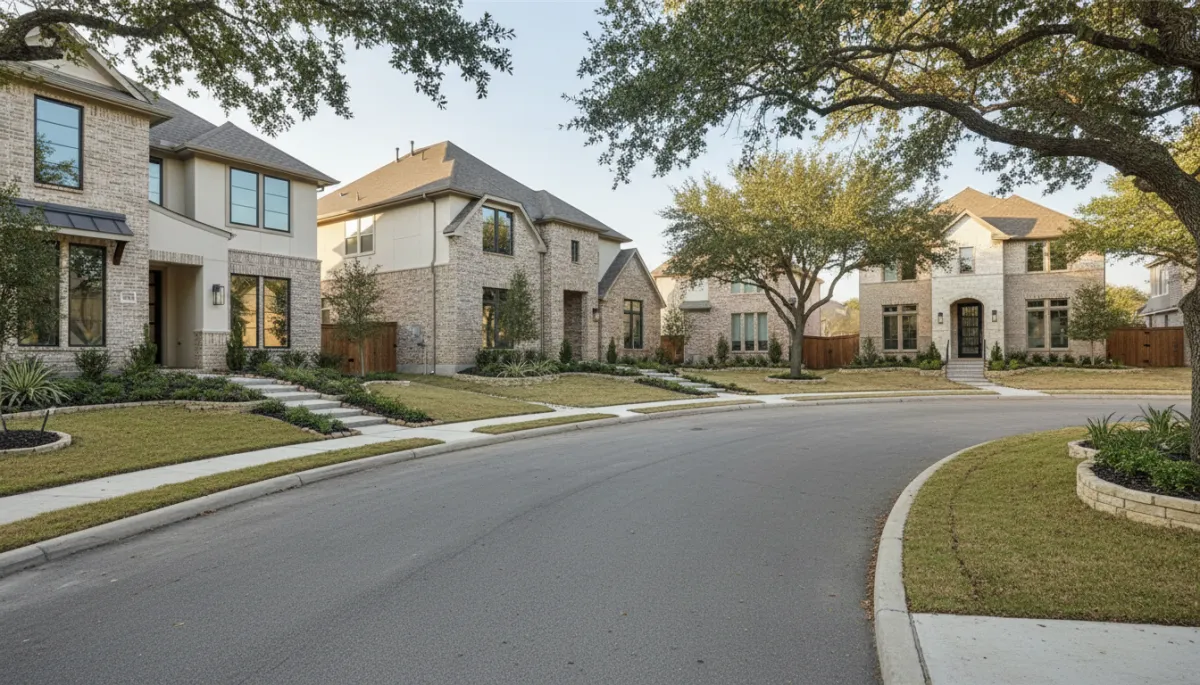
New construction across Houston suburbs is giving buyers more upscale, move-in-ready options.
Comparing Luxury in Montgomery County and the Houston Suburbs
So how do these two regions stack up if you’re considering a move, a second home, or an investment property? In Montgomery County, luxury homes are all about established prestige—tree‑lined streets, historic charm, and proximity to D.C. and major employers. Prices for true luxury properties often start near $1.8 million, and micro‑market differences matter a lot. Bethesda might see multiple offers within days, while Chevy Chase could offer a little more room to negotiate on price or contingencies. The real estate market here rewards patience, local expertise, and careful preparation on the seller side.
In contrast, the Houston suburbs offer a more spread‑out, lifestyle‑driven version of luxury. Think larger lots, resort‑style community amenities, and newer construction at a lower price point. A budget that buys a luxury condo or townhome in Montgomery County might stretch to a sizable single‑family home with a pool in Katy, Cypress, or The Woodlands. Mortgage rates around 6% have stabilized, and with more inventory on the market, buyers have genuine choices—especially in neighborhoods where new construction competes directly with resale homes.
Both areas share one important trait: strong underlying demand. In Montgomery County, high‑equity buyers and relocating professionals keep the luxury segment resilient. In the Houston suburbs, job growth in healthcare, energy, and tech continues to draw new residents, even as affordability pressures challenge renters and some would‑be first‑time buyers. For move‑up buyers, though, this environment can be ideal—sell a starter home, then leverage today’s balanced conditions to secure a newer, more luxurious property.
Practical Tips If You’re Planning a Move in 2026
Whether your heart is set on Montgomery County or the Houston suburbs, a few friendly strategies can make your luxury home search smoother—and your investment smarter.
Know your definition of “luxury.” In Montgomery County, luxury might mean a classic brick colonial in Bethesda or a modern estate in Potomac. In Houston suburbs, it could be a new construction home in a master‑planned community with a clubhouse, trails, and top schools. Clarify what matters most: square footage, finishes, location, or amenities.
Watch building permits and new construction trends. In Maryland, use Montgomery County’s permitting dashboard to see where new projects are concentrated. In Texas, keep an eye on builder activity in corridors like Fulshear, Katy, Cypress, and Conroe. Heavy new construction can mean more choices—but also more competition if you plan to sell in a few years.
Work with a local expert who understands micro‑markets. In Montgomery County, pricing can vary street by street in areas like Chevy Chase or Bethesda. In the Houston suburbs, school zones, flood maps, and HOA rules can dramatically affect both lifestyle and resale value. A knowledgeable agent can help you read between the lines of the raw data.
Plan for ongoing costs. Property taxes, insurance (especially in Texas, where premiums have been rising), HOA dues, and maintenance all play into what “affordable luxury” really means for your budget. Run the numbers with your lender so you’re comfortable long after closing day.
The Bottom Line: Luxury, Growth, and Opportunity
The 2026 real estate market may feel calmer than the whirlwind years we’ve just lived through, but that doesn’t mean opportunity has disappeared. In Montgomery County, luxury homes continue to hold their value thanks to limited inventory, deep‑pocketed buyers, and a strong regional economy. New construction and building permits show that growth is still happening—just in a more measured, data‑driven way. For buyers who value stability and prestige, it’s an appealing moment to step into or move up within this market.
In the Houston suburbs, the story is one of expansion and choice. New construction is reshaping the landscape, from Fulshear’s rapid growth to the continued popularity of Katy, Cypress, and The Woodlands. With inventory up and mortgage rates steady, buyers can tour more homes, compare floor plans, and negotiate thoughtfully—especially in communities where builders and resale sellers are competing for attention. For many families, that adds up to a rare combination: suburban luxury living with room to breathe and room to grow.
If you’re weighing Montgomery County versus the Houston suburbs, you’re really choosing between two strong but distinct versions of the American dream: classic East Coast sophistication versus sun‑drenched, master‑planned comfort. Either way, taking a close look at local building permits, new construction trends, and micro‑market data will help you move forward with confidence—and find a home that truly feels like an upgrade in every sense of the word.