
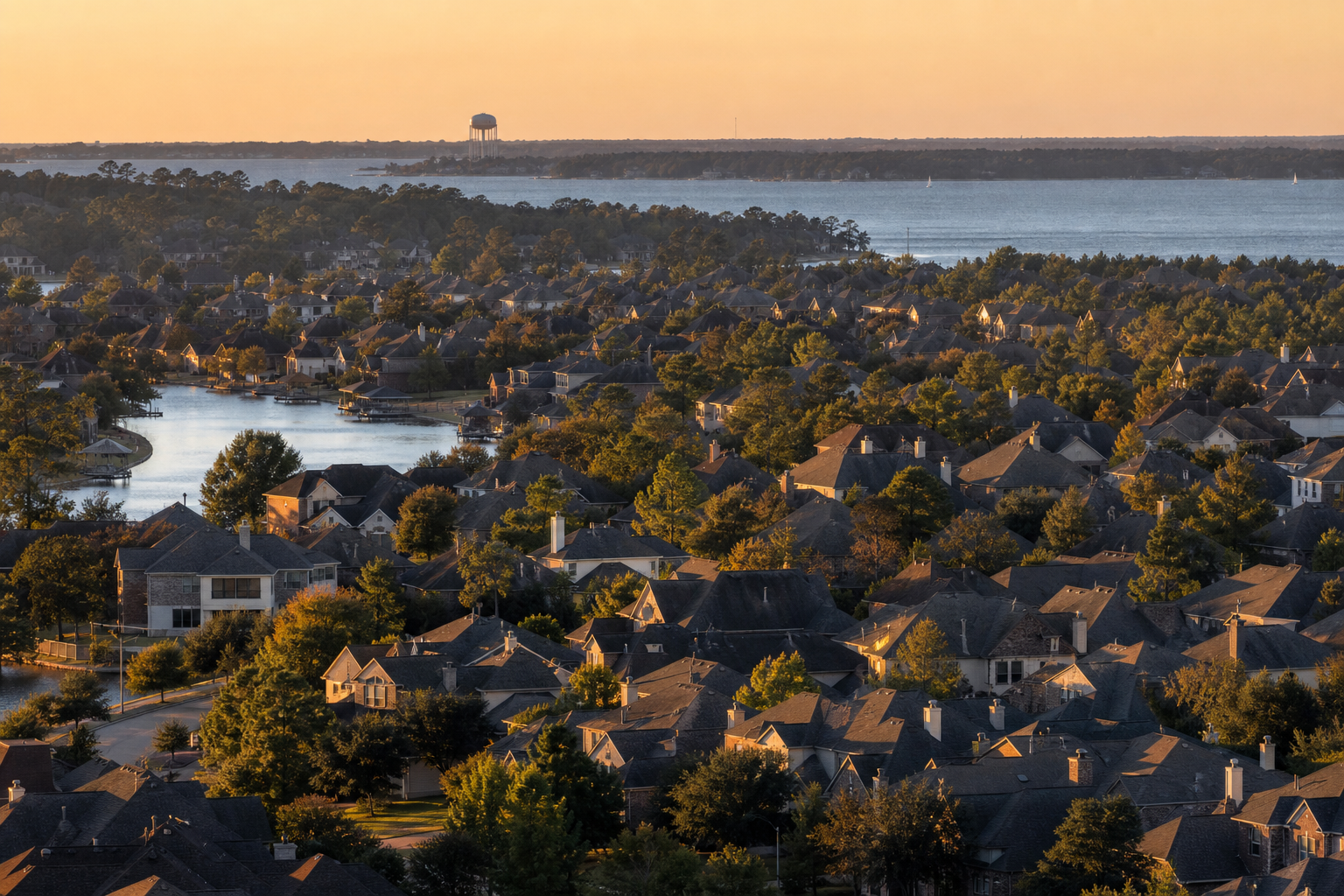
How is Houston growth on real estate affecting The Woodlands and North Houston corridor?
The Woodlands and the communities stretching south and west into North Houston are absorbing a steady wave of corporate investment, commercial leasing, and employment activity. That growth is creating real housing demand in specific submarkets, even as the broader Greater Houston market posted softer year-over-year numbers through August 2026. If you are buying, selling, or investing anywhere in this corridor, understanding where the growth is concentrated, and where it is not, is the difference between a well-timed move and an expensive assumption.
Key Takeaways
- According to the Houston Association of REALTORS®, Greater Houston single-family closings in August 2026 totaled 7,100, down 11.5% year over year, with a median price of $330,000, down 2.9%.
- The Woodlands functions as a commercial hub for North Houston, with active sectors in energy, chemicals, biomanufacturing, and premium office space, according to the Woodlands Area Economic Development Partnership.
- A 28,000-square-foot office lease with NAES Corporation at Hughes Landing closed in July 2026, reflecting continued commercial absorption in The Woodlands' premier mixed-use district.
- Corporate announcements drive housing demand, but announced projects and signed leases are not the same as delivered inventory, so buyers and investors should verify what is actually under construction before making decisions.
- Communities including Conroe, Spring, Magnolia, and Tomball offer proximity to The Woodlands employment base at different price points, each with its own jurisdiction, tax structure, and infrastructure timeline.
What does Houston growth on real estate actually look like in The Woodlands right now?
The Woodlands is not a bedroom community. It functions as a genuine commercial center for the North Houston region, with corporate tenants in energy, chemicals, and biomanufacturing anchoring its office market. In March 2026, global energy company AB selected The Woodlands for its North American headquarters, a move the community's official news page described as bringing jobs and long-term economic investment. In July 2026, NAES Corporation signed a 28,000-square-foot lease at Hughes Landing, one of the most active commercial nodes in the submarket.
That employment activity matters for housing because workers follow jobs. When a company plants a headquarters in The Woodlands, it creates a pipeline of relocating employees who need homes, often quickly and often at mid-to-upper price points. I work with relocating buyers regularly, and the pattern is consistent: they want to be within a reasonable commute of their new office, which means The Woodlands itself, but also Spring, Conroe, and the communities along the Gosling Road and West Rayford Road corridors.
At the same time, the broader market context matters. The Houston Association of REALTORS® reported that Greater Houston single-family closings in August 2026 came in at 7,100, down 11.5% from August 2025. The average single-family price was $433,016, down 1.0%, and the median was $330,000, down 2.9%. Total sales across all property types reached 8,362 transactions, representing approximately $3.5 billion in dollar volume, also down year over year. Those are Greater Houston figures, not Woodlands-specific numbers, but they set the backdrop: this is a market where buyers have more negotiating room than they did a year ago, even in high-demand corridors.
What the softening market means for buyers and investors
A slower Greater Houston market does not mean The Woodlands corridor is stagnant. It means the relationship between growth announcements and home prices is more nuanced than headlines suggest. Corporate relocations support demand, but they do not automatically push every nearby neighborhood into a bidding-war environment. Buyers who understand that distinction can negotiate confidently. Investors who ignore it can overpay based on hype rather than fundamentals.
The townhome and condominium segment tells a similar story. According to the Houston Association of REALTORS®, Greater Houston condo and townhome sales in August 2026 held flat year over year at 405 units, but the median price dropped 7.1% to $195,000, with the average at $245,692, down 1.5%. For investors evaluating attached product near employment centers, that price softening creates entry-point opportunities, but rent levels and occupancy rates need to be verified at the property level before assuming appreciation.
Which communities near The Woodlands are worth watching for buyers and investors?
The growth corridor extends well beyond The Woodlands' boundaries. Here is how I think about the key submarkets when I am advising buyers and investors in this area.
Spring and the Gosling Road corridor
Spring sits at the southern edge of the North Houston growth zone, with direct access to I-45 and proximity to The Woodlands employment base. The Gosling Road corridor has attracted retail, medical, and multifamily development, and interest in rental-property investment there reflects that momentum. Buyers should verify municipal jurisdiction carefully in Spring, because it spans both unincorporated Harris County and portions of the Spring Independent School District, which affects tax rates and services.
Conroe and southern Montgomery County
Conroe offers a different value proposition: a full-service city with its own employment base, lower land costs than The Woodlands, and access to the same North Houston job market via I-45. New housing development has been active in the communities between Conroe and The Woodlands, and the Conroe home buying landscape in 2026 reflects that range of options. If you want to compare the two cities directly, I put together a detailed look at Montgomery vs. Conroe for home buyers that walks through the tradeoffs.
Magnolia and Tomball
Magnolia and Tomball attract buyers who want more land and a different pace, while still maintaining reasonable access to North Houston employment. Both markets have seen new construction activity, and Magnolia's real estate market has its own momentum worth understanding before you assume it mirrors The Woodlands. Acreage properties and country-home buyers often find more value here than closer to the commercial core.
Willis and Lake Conroe
Willis and the Lake Conroe area represent the northern end of the corridor. Waterfront and lake-access properties have their own demand drivers that are somewhat insulated from office-market cycles. For buyers interested in that segment, property-specific details, including flood zone designation, HOA structure, and lake access type, matter enormously. I covered how those details can shift a decision in my post on Willis, TX real estate and what property details buyers need to know.
| Greater Houston Market Metric | August 2026 | Year-Over-Year Change |
|---|---|---|
| Single-family closings | 7,100 | -11.5% |
| Average single-family price | $433,016 | -1.0% |
| Median single-family price | $330,000 | -2.9% |
| Total sales (all property types) | 8,362 | -10.2% |
| Total dollar volume | ~$3.5 billion | N/A |
| Condo/townhome sales | 405 units | Unchanged |
| Median condo/townhome price | $195,000 | -7.1% |
Source: Houston Association of REALTORS®, August 2026. These are Greater Houston figures. Submarket data for The Woodlands and Montgomery County may differ.
What should investors verify before buying near The Woodlands?
Houston growth on real estate in this corridor creates real opportunity, but the due-diligence list is longer than it looks. Here is what I walk investor clients through before they make an offer on anything in this area.
- Employment proximity and commute routes. How close is the property to Hughes Landing, the I-45 corridor, or the major employers that have announced or expanded in The Woodlands? A 10-minute commute difference can affect rental demand and resale appeal significantly.
- Announced versus delivered development. A project announcement is not a finished road, retail center, or office building. Verify what has received approvals, secured financing, and broken ground, not just what has been announced. The Woodlands news page tracks activity, but reading the details carefully matters.
- Municipal jurisdiction and tax structure. Properties inside The Woodlands, in unincorporated Montgomery County, or within Conroe city limits carry different tax rates, utility providers, and municipal service levels. This affects both operating costs and buyer appeal at resale.
- Flood zone and infrastructure. Southeast Texas flood risk is real and property-specific. Verify the current flood map designation and any infrastructure improvement plans for the specific parcel, not just the general area. The FEMA Flood Map Service Center is the starting point, but a local agent and a good inspector will tell you what the map does not.
- Current rent and occupancy evidence. If you are buying for rental income, verify actual rent levels and occupancy rates for comparable properties in the immediate area. The National Association of REALTORS® research center tracks national investment trends, but local rent data requires local sourcing.
- HOA and deed restrictions. Many communities in this corridor carry HOA fees, deed restrictions, and community governance structures that affect what you can do with the property. Review these before, not after, going under contract.
Every investment situation is different, and the only way to know whether a specific property makes sense is to run the actual numbers with someone who knows this submarket. That is exactly the conversation I have with investor clients before they start making offers.
If you want to understand how the broader Montgomery County market is trending as a foundation for any of these decisions, my Montgomery County real estate market forecast for 2026 covers the key indicators worth tracking.
To read what other buyers and investors have said about working with me, I invite you to check out my Google reviews.
Frequently Asked Questions
How is The Woodlands' growth affecting home prices in Montgomery County?
Corporate relocations and commercial leasing in The Woodlands support housing demand throughout southern Montgomery County, but they do not uniformly push prices up across every neighborhood. The broader Greater Houston market saw median single-family prices dip 2.9% year over year in August 2026, according to the Houston Association of REALTORS®, which means buyers have more room to negotiate than the growth headlines might suggest. The impact on any specific property depends on its proximity to employment, its jurisdiction, and current inventory in that submarket.
Is North Houston still a good place to buy an investment property in 2026?
North Houston remains an active investment market, driven by employment anchors in The Woodlands and ongoing commercial development along the I-45 corridor. That said, the Greater Houston market softened year over year in mid-2026, so investors need to verify current rent levels, occupancy data, and actual construction timelines rather than relying on announcement-stage projections. A property's specific location, jurisdiction, flood-zone status, and proximity to jobs matters more than the general growth narrative.
Which areas near The Woodlands are seeing the most new housing development?
New housing activity has been concentrated in southern Montgomery County, the communities along the Gosling Road and West Rayford Road corridors, and the areas between Conroe and The Woodlands on and near I-45. Spring, Magnolia, and Tomball have also absorbed new construction demand from buyers priced out of The Woodlands itself. Each of these communities has its own tax structure, school district boundaries, and infrastructure timeline, so comparing them requires more than a map.
Are Greater Houston home sales slowing even though North Houston continues to grow?
Yes, the two trends are running simultaneously. The Houston Association of REALTORS® reported that Greater Houston single-family closings in August 2026 fell 11.5% year over year to 7,100 transactions. Corporate growth in The Woodlands corridor supports localized demand, but it does not override the broader market conditions that are giving buyers more leverage region-wide. Sellers in this corridor need accurate, current pricing, not assumptions based on development announcements.
Should buyers consider Conroe, Spring, Tomball, or Magnolia as alternatives to The Woodlands?
All four communities offer real proximity to The Woodlands employment base at different price points and with different tradeoffs in taxes, lot sizes, commute times, and community character. The right choice depends on your priorities, not on a general ranking. I have helped buyers work through exactly this comparison, and the answer is almost never the same twice, which is why a conversation about your specific situation is worth more than any list.
If you want to know how the North Houston growth story affects your specific buying, selling, or investment decision, the most useful next step is a direct conversation. Request a free home valuation or consultation and I will walk you through what the market actually looks like for your property and your goals.
This article is general information only and is not legal, tax, or financial advice. Market data reflects Greater Houston figures reported by the Houston Association of REALTORS® and may not represent conditions in specific submarkets. Readers should confirm their own numbers with their closing agent, tax advisor, or lender. Stacey Brown, License #628390, is regulated by the Texas Real Estate Commission. Texas Real Estate Commission Consumer Protection Notice. Information About Brokerage Services. Equal Housing Opportunity.